Shadow Dungeon Drops and Loot
How Shadow Dungeon drops work: loot tied to each map, 100M+ items from 3,200 templates, equipment with talent-synergy skills, reforging and no seasonal resets.
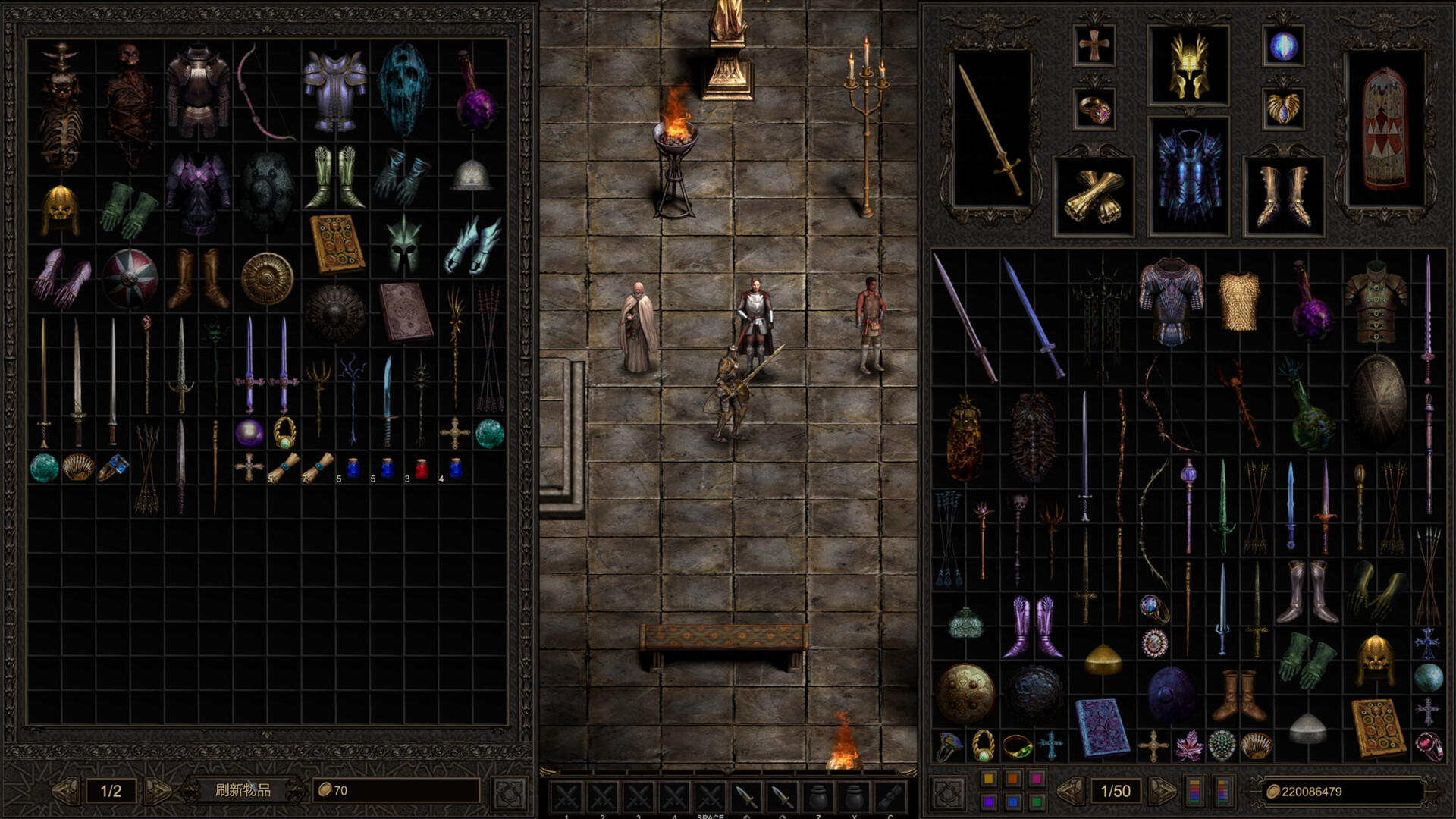
Drops are the engine of Shadow Dungeon: the entire game is a loop of fighting, looting, and rebuilding around what falls. The official systems define that loop tightly — monster levels and item drops are tied to the map rather than your character's level, more than half of all equipment includes additional skills that synergize with talents, and nothing you earn is ever taken back. This page explains each of those rules, the numbers behind the item pool, and the systems that turn loot into build power.
Every claim here comes from OO Cat's store copy and launch notes unless another source is named. For what those items do to your character, read builds; for the fights that guard the best tables, read bosses.
The official loot numbers
The store's content list carries the headline figure: over 100,000,000 different items, generated semi-randomly from 3,200 base templates. An InsertCoins review published on launch day supplies the correct reading — it is a combinatorial count, not a hand-made catalog. "Nobody drew a hundred million swords," as the review puts it; the 3,200 templates and their rolling affixes produce the variety.
The more consequential line sits right below it: more than half of all equipment includes additional skills that synergize with talents. That sentence is why loot checking matters in this game. An item is not just stat blocks — it can carry a skill your talent tree never offered, open a hybrid path, or change how an existing skill behaves. The store's about text makes a related claim in different words (legendary and mythic items making up more than half of all loot); this page quotes the content-list version, because it is the one that drives build decisions.
The 1.0 launch notes quantify the affix layer that rides on top: over 1,000 new weapon affixes in five categories — Basic, Special, Negative Effects, Skills, and Summoning Skills — and 2,400 new weapon-granted skills, including Auras, Trap Launchers, Skill Conversions, Shields that Block Enemy Projectiles, Skill Combo Launchers, Summoned Creature Accessories, and Summoned Creature Attacks with Additional Skills. Reading the named types tells you where the design is going: gear that grants behavior, not just numbers.
Map-bound loot and farming
The single most important drop rule is in the launch notes: "Monster levels and item drops are now tied to the map instead of the player's level." The consequences run through everything. A late-game hell map cannot be farmed by overleveling an early dungeon; the gear that solves a map comes from that map's own table. If a region feels brutal, the intended answers are its drops, a build that matches its fights, or learning those fights — not a detour to grind elsewhere. Returning to earlier maps to finish secrets still works, because their drops always match those maps.
The endgame multiplies the same rule. After the story, Greater Rifts open on Normal, Master, Nightmare, and Inferno; the launch notes say higher difficulties "provide higher chances of obtaining rare items, and weapons can also roll more affixes". Rifts also hold exclusive rewards: 370 Talent Skill Runes, 6,800 Equipment Skill Runes, and 60 Attribute Runes, alongside Socketing Stones, Super Enhancement Stones, Essence Stones, Permanent Magic Stones, and the Golden Hammer and Divine Mirror.
Community guides from launch week describe the practical farming shape that falls out of these rules: a tight circuit between the map's waypoint, its boss, its loot, and a reset, then spending the results in a higher rift difficulty. One launch-week video also floats an enhancement ceiling around plus 20 at the blacksmith — a player claim with no official confirmation, so this page records it as a report rather than a number.
From drop to build: sets, reforging, and shrines
Three systems convert loot into build power. Sets: each of the four classes has 15 armor sets, and most sets include affixes that alter skill forms — swapping sets can change how a skill behaves, not just how hard it hits. Reforging, Enchanting & Enhancement: the store lists this system without publishing its mechanics, so its exact costs and caps are still officially undescribed. Consumables and shrines: 17 Blessing Shrines, various gems, buff potions, and rare permanent elixirs round out the permanent-kit layer, and the developer confirmed in a community reply that potions are unlimited.
Loot handling is automated where it matters. The launch notes describe Treasure Sprites — companion creatures that pick up equipment, directly salvage unwanted pieces into gold, carry their own unique effects, and can even pass through walls to retrieve gear stuck outside reach. Patch 1.0.1 on August 27, 2026 increased their movement speed and fixed auto-salvage behavior, according to fan wikis that track the patch notes. Storage backs the collection habit: the inventory unlocks additional pages through quests, and a warehouse with unlimited pages stores hundreds of thousands of items.
The economy rules: nothing is taken back
The store's "Pure Loot-Driven Gameplay" section makes three commitments in one line: no seasonal resets, all items obtained remain permanent and are never weakened, no microtransactions — all loot is earned through combat. For a loot game, that is the whole social contract: your inventory only grows in value, and nothing on the roadmap devalues it. The same page's planned future content — four new classes, a Mercenary System, Tower Defense Challenges, a Rune System, and Transmutation & Crafting — promises more systems without dates, but nothing that retires what you own.
What is not officially documented: a rarity-tier list beyond what the game's own UI shows, exact drop-rate percentages, and enhancement caps. Community videos and forum posts float specifics; no official source confirms them, so this page does not either. When OO Cat publishes loot specifics, they will be added here with their source — and for the build side of every drop, continue to builds, gameplay for the loop that farms them, and maps for the terrain that sets the tables.
Auto-pickup, filters, and inventory quality of life
A loot game lives or dies on how its drops reach you, and Shadow Dungeon's answer is a layered automation stack. Treasure Sprites do the floor work — the launch notes describe them picking up equipment, salvaging unwanted pieces into gold directly, carrying unique per-sprite effects, and even passing through walls to retrieve gear stuck outside reach. Patch 1.0.1 on August 27, 2026 tuned this layer further: fan-tracked notes report increased sprite movement speed and fixed auto-salvage behavior, alongside a fix for the one-click backpack sorting hotkey.
Storage is deliberately over-provisioned. The inventory unlocks additional pages through quests, and the storage warehouse offers unlimited pages for hundreds of thousands of items — the store's answer to players of other loot games who hoard against future builds. Demo-era players had already flagged the loot filter and auto-pickup as present by mid-May 2026, with one thread noting the filter could be disabled in settings; the full release carried the systems forward. What the community still asks for — a class-specific gear filter in particular, per the top QoL suggestion threads — is not in the game yet, and stays on the wishlist rather than in these pages.
Frequently Asked Questions
Quick answers about Shadow Dungeon.
How do drops work in Shadow Dungeon?
Monster levels and item drops are tied to the map, not your character's level, per the 1.0 launch notes. Each map's drop table is the reason to farm it, and higher Greater Rift difficulties raise rare-item chances and weapon affix counts.
How many items are in Shadow Dungeon?
The official count is over 100,000,000 different items, generated semi-randomly from 3,200 base templates. More than half of all equipment includes additional skills that synergize with talents.
Do items get nerfed or reset?
No. The store page states there are no seasonal resets, every item obtained remains permanent and is never weakened, and there are no microtransactions — all loot is earned through combat.