Shadow Dungeon Maps and Chapters
Shadow Dungeon maps and chapters: 7 chapters across 160+ maps and stages, a 30-50 hour story ending near level 100, environments from dungeons to hell itself.
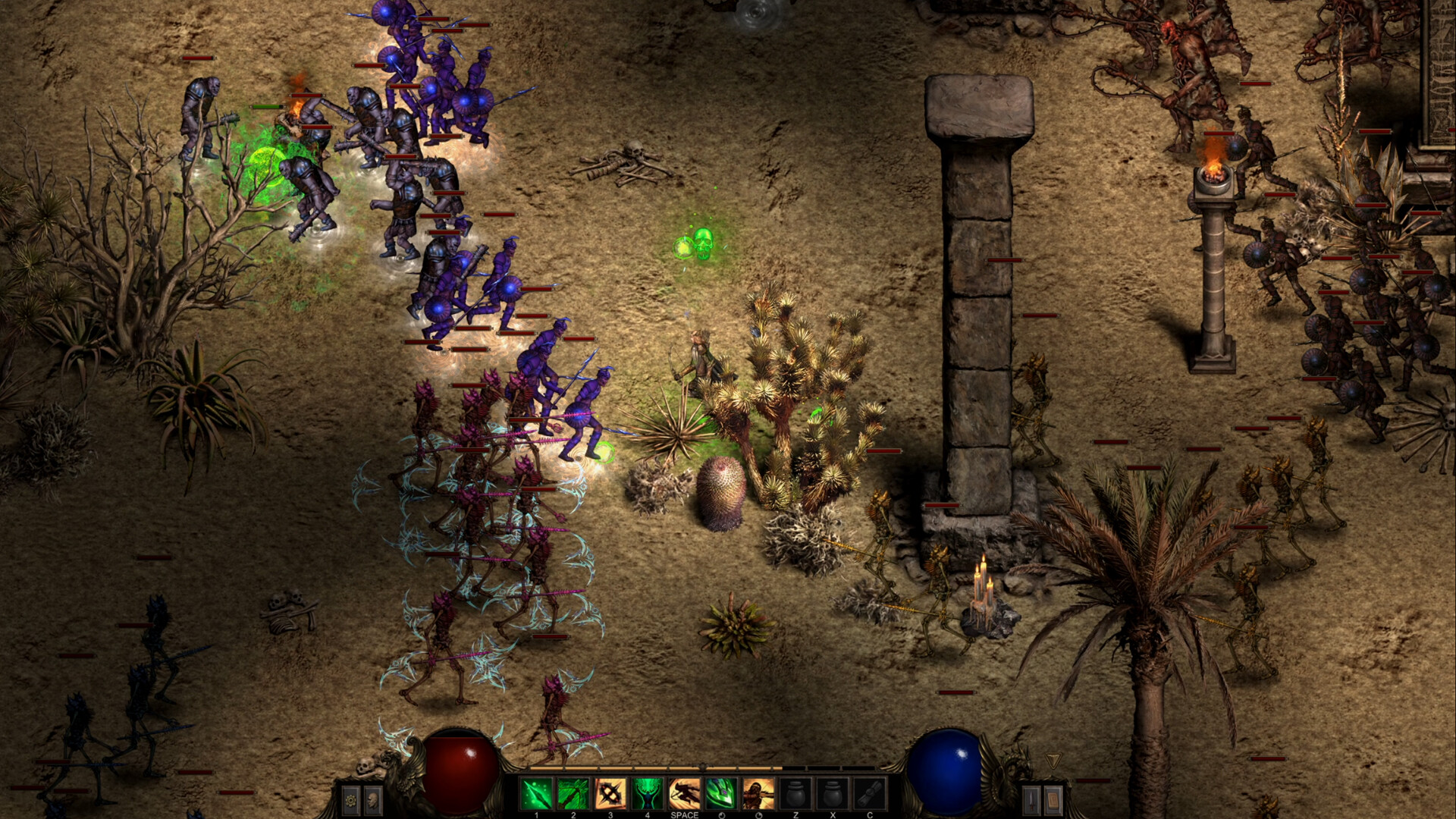
Shadow Dungeon's campaign runs through seven chapters and more than 160 unique maps and stages, in a story the official estimate puts at 30–50 hours, ending with the Demon Lord beneath the abyss. The structure matters mechanically as much as narratively: because monster levels and drops bind to each map, the campaign is less a corridor of levels and more a sequence of self-contained zones, each with its own encounter level, its own drop table, and its own reasons to return.
This page explains how the campaign is organized, how progression actually works, and what opens when the story ends. For the monsters waiting on those maps, read bosses; for the loot each map holds, read drops.
The seven chapters, as officially described
OO Cat has not published chapter names, and the store deliberately describes the route through environments instead of branded titles: "From eerie and terrifying dungeons to solemn ancient temples, from scorching deserts to haunted ruins filled with restless spirits, and even to places no mortal has ever set foot in — including distant realms beyond reality and the depths of hell itself." The campaign climax is the Demon Lord, named in the store's short description as lurking beneath the abyss.
That gives the campaign a recognizable dark-fantasy arc without an official atlas. Community videos label runs by chapter number — Chapter 3, Chapter 4 — and demo-era players mapped the demo's content to "the first 3 acts", but no official material attaches names, boss lists, or recommended levels to individual chapters. This page keeps that discipline: the chapters are numbered, the environments are quoted, and everything beyond that is left to the game itself.
How map progression works
The load-bearing rule comes from the 1.0 launch notes: monster levels and item drops are tied to the map, not the player's level. The level curve is tuned so you arrive at each chapter appropriately powerful — players reach approximately level 99–100 right as the main story ends, with 100 as the cap — but within that curve, the map, not your XP bar, sets every encounter's difficulty and every drop's table.
The practical consequence changes how you handle walls. Grinding an early map does not soften a later one, and skipping ahead does not work like a classic overlevel trick. If a map's fights stop you, the levers are that map's own drops, a build adjusted for the fight — the Forgetfulness Potion reported by launch-footage guides makes a respec cheap — or learning its patterns. Returning to earlier maps to finish secrets works fine at any time, because their drops always match those maps; fan walkthroughs make exactly this recommendation for completionists.
There is no official per-chapter recommended level list, and given the map-bound design, one may never be needed: the encounter level is wherever you are standing. If a map feels brutal, that is information about your gear and build, not your level.
Campaign length and the level curve
The 1.0 rebalance tuned the campaign into a specific shape: approximately 30–50 hours across the seven chapters, with the level curve landing players near 99–100 as the credits approach. That length is long enough to pass through every system — the three talent trees of your class, item-granted skills, 15 armor sets per class, 17 Blessing Shrines, gems, potions, and permanent elixirs — and short enough that the endgame arrives while the build is still fun to drive.
Launch-week impressions of the pacing line up with the official range. An InsertCoins review describes a game that "takes an hour off you when you promised it fifteen minutes"; Steam community reviews call the map pathing relatively linear from map to map — a fair trade, in the same reviews, for a campaign designed as one continuous ascent toward the cap rather than an open world.
Performance on the maps themselves was part of the 1.0 work: the launch notes describe particle counts cut by 60% for roughly 40% better frame rates, lighting contrast reduced, and many maps scaled down with environmental objects removed to protect frame rates — with the Steam Deck explicitly in mind.
After the credits: Paragon and Greater Rifts
The story's end is the build's midpoint. At level 100, players unlock Paragon Levels and the Paragon Talent Tree, which add attribute enhancements on top of the three class trees; the developer confirmed in a community reply that Paragon level is character-specific. At the same time, Greater Rifts open — four difficulties, Normal through Inferno, with higher tiers improving rare-item chances and weapon affix counts, plus rift-exclusive rewards: 370 Talent Skill Runes, 6,800 Equipment Skill Runes, and 60 Attribute Runes per the launch notes.
The store also lists Mystic Dungeon Challenges among shipped content without describing them, so consider them an officially named, officially unexplained extra layer. Chapter-by-chapter walkthroughs — routes, secrets, and map-specific farming notes — will be added to this hub as each is verified on the current patch. Until then, gameplay covers the loop that carries you between the maps, and the wiki index links every hub on the site.
The environments, one by one
Since official copy describes the campaign through its environments, it is worth giving each of the store's phrases its own line — this is as close to a chapter list as official material comes. The run opens in eerie and terrifying dungeons, the game's namesake shadow dungeons where the Demon Lord waits beneath the abyss. It passes through solemn ancient temples, whose scale shows up in official screenshots. It crosses scorching deserts, then haunted ruins filled with restless spirits. The final stretch leaves mortal ground entirely: distant realms beyond reality and the depths of hell itself, where the story ends.
Two things the environment list deliberately does not do: attach chapter numbers, and name individual maps. The 160+ maps and stages are the levels inside those seven stretches — the launch notes call them 160 main story levels — and community videos numbering Chapter 3 or Chapter 4 runs are labeling their own progress, not reading official titles. Fan walkthroughs that cover the campaign keep the same restraint, and this wiki follows their example rather than inventing named chapters.
Secrets, backtracking, and farming the early maps
The store describes a world "filled with hidden treasures", and the map-bound design gives backtracking a real payoff: because every map's drops always match that map, returning to an earlier zone to finish its secrets still earns that zone's gear, at that zone's difficulty. Fan walkthroughs recommend exactly this for completionists — clear a chapter's maps, push on, and return for secrets when a build wants the earlier tables again.
For farming rather than completion, the loop community settled on follows from the same rule: pick the map whose table you want, tighten the circuit between waypoint, boss, loot, and reset, then spend the results wherever you are in the campaign. The launch notes' level curve — approximately level 99–100 at the story's end — means the campaign itself is the leveling path; grinding off-path maps buys gear, not levels, because monster levels follow the map you are standing on. Where those tables lead after the credits, bosses and drops pick up the thread.
Frequently Asked Questions
Quick answers about Shadow Dungeon.
How long is the Shadow Dungeon campaign?
The 1.0 launch notes put the seven-chapter campaign at approximately 30-50 hours, tuned so players reach roughly level 99-100 as the main story ends. The level cap is 100, after which Paragon progression opens.
What are the chapter names in Shadow Dungeon?
There are no official chapter names. The store describes the route through environments — eerie dungeons, solemn ancient temples, scorching deserts, haunted ruins, realms beyond reality, and the depths of hell — ending at the Demon Lord.
Does grinding early maps make later ones easier?
No. Monster levels and item drops are tied to the map, not the player's level, so overleveling an early region does not soften a later one. Gear for a map comes from that map's own drops.