Shadow Dungeon Gameplay
Shadow Dungeon gameplay explained: real-time solo hack-and-slash combat, mouse and controller support, the loot loop and performance in a retro 2.5D ARPG.
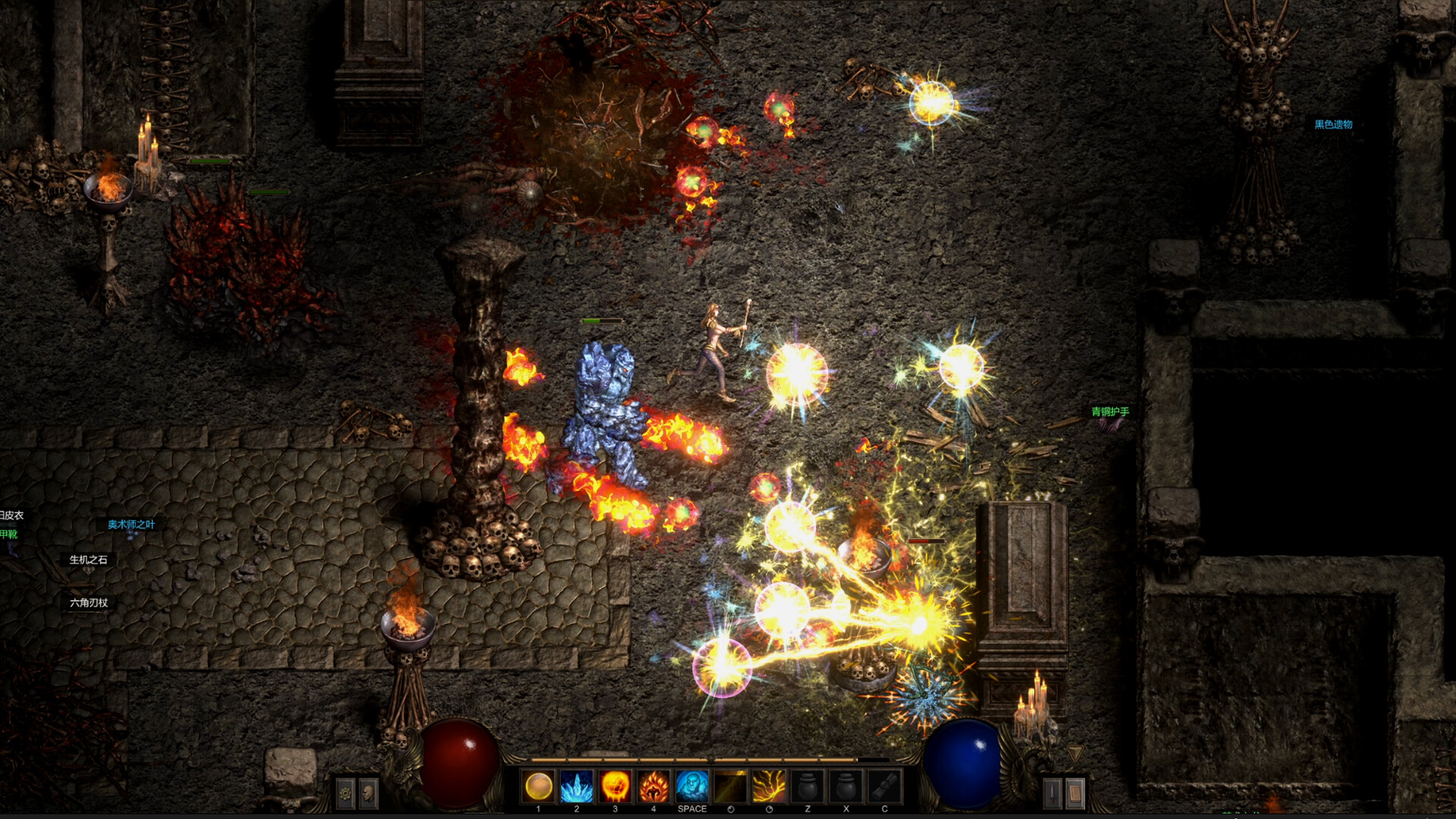
Shadow Dungeon gameplay is a retro-styled, loot-driven hack-and-slash: you fight dense monster packs in real time, vacuum up gear that changes your build, and push deeper until the credits — then keep pushing in Greater Rifts. The presentation is deliberately 2.5D, "reminiscent of late 1990s role-playing games" in the store's own words; the systems underneath are modern, starting with a 1.0 patch that reworked controls, rebalanced the campaign to 30–50 hours, and cut visual-effect particles by 60% for roughly 40% better frame rates.
This page is the gameplay reference: combat and controls, the core loop, progression systems, performance and accessibility, and what the game deliberately does not have. For the systems the loop feeds, start at builds and drops.
Combat and controls
Combat is real-time and solo-only. You move through packs of monsters, manage skill cooldowns, dodge what can be dodged, and collect the drops your kills produce. The store's framing of the fantasy is one sentence: nightmarish monsters crawl from the darkness while the Demon Lord waits beneath the abyss, and you carve through them with one of four classes — elemental magic, dual blades, precision archery, or summoned demons and skeletons.
The 1.0 launch notes reshaped input around player choice. Mouse movement became a first-class option, the cursor size is customizable, and pages of the inventory, storage, and talent tree switch with the mouse. On controller, the notes added automatic target acquisition and automatic attacks, "each skill has its own intelligent targeting behavior", and all buff potions trigger with a single button press. The store lists Full Controller Support for Xbox controllers; patch 1.0.1 on August 27, 2026 fixed controllers not being recognized and controller-related frame drops, according to fan wikis that track the patch notes.
Steam Deck is rated Playable, and the launch notes went uncharacteristically specific: contextual buttons that drop, sell, or send items to storage depending on the screen open; skill upgrading mapped to A (one point), X (max the skill), and Y (max the skill and all sub-skills); larger fonts; and many maps scaled down to protect frame rates. A built-in DPS Tester completes the toolkit — a training target that can attack the player, so counterattack skills trigger and get measured safely.
The core loop
A typical session is a tight circuit: enter a map, fight through its packs, kill its boss, collect the drops, compare gear, adjust the build, reset, repeat. Two official systems define why the loop holds attention. First, more than half of all equipment includes additional skills that synergize with talents, so drops keep rewriting what your character can do — an InsertCoins launch review calls the itemization the game's defining system, and top-rated Steam reviews single it out too ("the itemization is just insane").
Second, skill points are unlimited in late-game progression. The store frames it as enabling advanced hybrid builds; the InsertCoins review reads it as the end of irreversible choices: "By late progression you can eventually take everything... the question is no longer what to choose, it becomes what to combine." Treasure Sprites keep the loop friction low by auto-pickup and salvaging unwanted gear into gold — even pieces stuck outside walls — while the warehouse's unlimited pages store hundreds of thousands of items.
Some players characterize the feel in comparison terms: launch-week Steam reviews variously call it "a Vampire Survivors type of game", reminiscent of "Diablo 1 & 2, along with Grim Dawn", or "the new king" of single-player ARPGs. Those are individual framings of the same official loop — auto-attack options plus dense packs plus loot — and they disagree in the way launch-week impressions always do.
Progression systems
The campaign carries you through the systems in sequence. Its roughly 30–50 hours cross seven chapters and 160+ maps and stages, with monster levels and drops bound to each map. The level curve lands you near the cap of 100 as the story ends, at which point Paragon Levels and the Paragon Talent Tree open — the developer confirmed in a community reply that Paragon level is character-specific, and that potions are unlimited.
Past the cap, the loop moves to Greater Rifts: Normal, Master, Nightmare, and Inferno, with higher difficulties improving rare-item odds and weapon affix rolls. The store also lists Mystic Dungeon Challenges among shipped content without describing them. Both feed the same build you have been growing since the first map — builds tracks that growth, and maps explains the terrain it happens on.
Performance, accessibility, and what is missing
The 1.0 patch attacked performance head-on: visual-effect particles cut by 60% for approximately 40% better frame rates, global lighting controls with reduced contrast, and Deck-focused map scale-downs. The store lists seven accessibility features — Save Anytime, Camera Comfort, Contrast Controls, Custom Volume Controls, Stereo Sound, playable without Quick Time Events, and playable at your own pace — and ships with 24 languages, each with interface, full audio, and subtitles. The audio design gets its own official bullets: multi-layered sound-avoidance systems and intelligent loudness control.
Equally worth knowing is what the game does not ship. There are no Steam Achievements listed, no multiplayer or co-op of any kind, and no microtransactions — all loot is earned in combat. Community reviews in launch week reported frame hitches, flickering on some setups, and long initial load times; minimum hardware is modest — a GTX 960 or RX 460, 8 GB of RAM, and 10 GB of storage on Windows 7 or newer, per the store's system requirements. If the loop sounds like yours, the demo includes all four classes, and the review hub collects what critics and players say about the whole package.
System requirements
Official store figures, useful for judging the performance reports above against your own hardware:
| Tier | CPU | RAM | GPU | Storage |
|---|---|---|---|---|
| Minimum | Intel Core i5-4460 or AMD Ryzen 5 2400G | 8 GB | NVIDIA GTX 960 or AMD RX 460 | 10 GB |
| Recommended | Intel Core i7-6700 or AMD Ryzen 5 2600X | 16 GB | GTX 2060 or AMD RX 5700 | 15 GB |
Both tiers target DirectX 11 on Windows 7 or newer. The store's own recommended-GPU string reads "GTX 2060" — an odd label worth noting in passing, since the RTX 2060 is the card most players will actually match against it. Steam Deck is rated Playable, and the 1.0 notes went further than most developers do for handhelds: contextual button behaviors per screen, one-press skill upgrading, larger fonts, and map scale-downs to protect frame rates.
How the loop compares
Launch-week players keep reaching for comparisons, and the disagreements are informative. One top-rated review calls it "a Vampire Survivors type of game" with "200% grinding"; another calls it "a delightful diablo-astlibra-esque arpg" and "the new king"; a third compares it to "Diablo 1 & 2, along with Grim Dawn". All three describe the same official loop — auto-attack options, dense packs, map-bound loot — from different tastes, which is the most honest picture a launch week can give.
What is not on the list matters too: no co-op anywhere, no Steam Achievements listed, no microtransactions, and no seasonal ladder — the store's anti-reset pledge means your inventory is a permanent collection rather than a season wiped. For players choosing between this and other loot games, that pledge plus the $8.99 launch price is the differentiator the reviews keep returning to. The review page collects the verdicts with dates; the demo lets you test the loop before any of them.
Frequently Asked Questions
Quick answers about Shadow Dungeon.
Is Shadow Dungeon single-player?
Yes. The store lists it as a single-player game, and nothing in the official material describes co-op or online modes. The campaign, Greater Rifts, and Mystic Dungeon Challenges are all played solo.
Does Shadow Dungeon have controller support?
Yes. The store lists Full Controller Support for Xbox controllers, and the 1.0 notes added automatic target acquisition and automatic attacks with per-skill intelligent targeting. Steam Deck is rated Playable.
How does combat work?
Real-time hack-and-slash: dense monster packs, cooldown-based skills, and loot-driven power growth. The 1.0 notes made mouse movement a first-class option and let players trigger all buff potions with a single button.